Hospitals depend on reliable medical devices to diagnose diseases, monitor patients, provide treatment, and manage emergencies. From patient monitoring equipment to diagnostic and laboratory devices, the right medical technology helps healthcare professionals deliver safer and more efficient patient care.
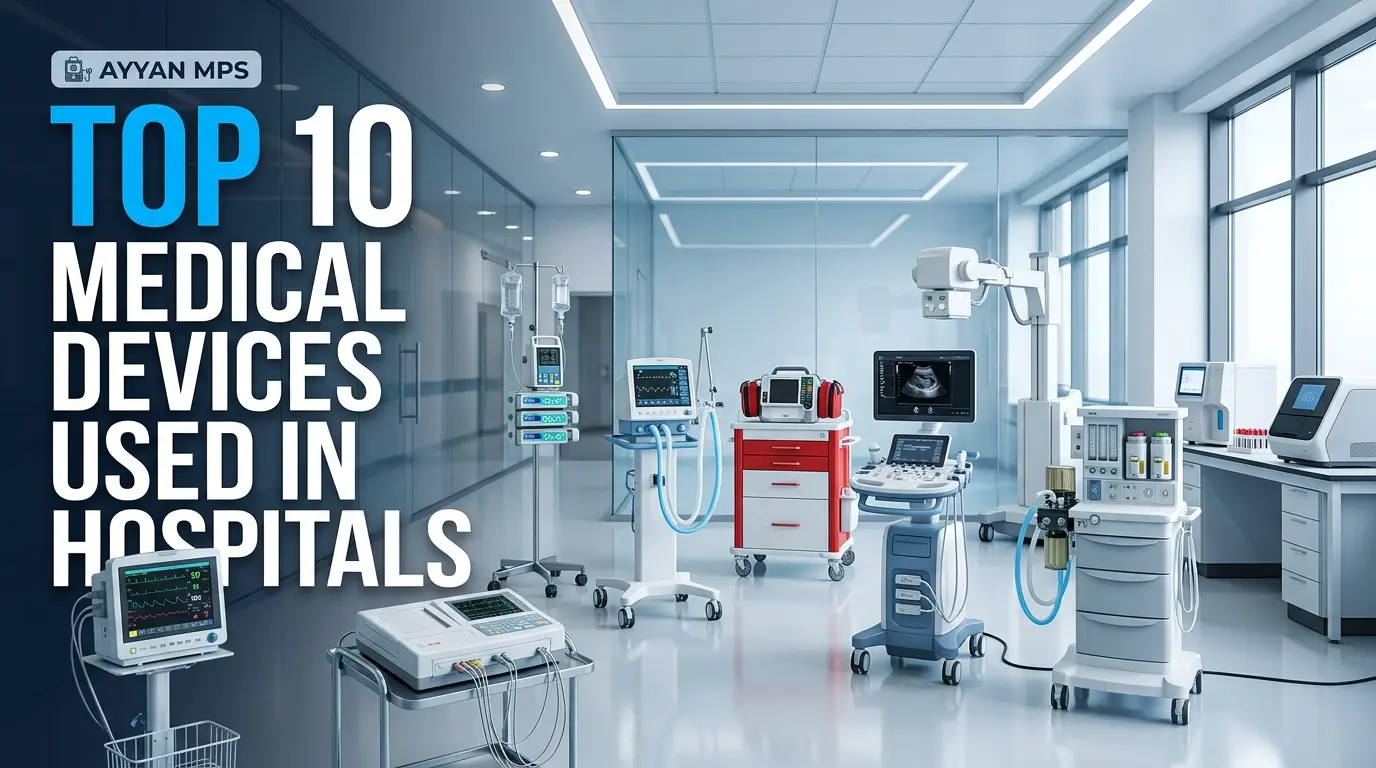
For hospitals, clinics, diagnostic centers, and healthcare facilities, selecting high-quality equipment is an important investment. This guide covers the top 10 essential medical devices for hospitals and explains why each device is important.
1. Patient Monitor
A patient monitor is one of the most important devices in a hospital. It continuously monitors vital signs such as:
- Heart rate
- Blood pressure
- Oxygen saturation (SpO₂)
- Respiratory rate
- Body temperature
- ECG
Patient monitors are commonly used in emergency departments, intensive care units (ICUs), operating rooms, and general wards. They allow healthcare professionals to identify changes in a patient’s condition quickly.
2. Ventilator
A ventilator provides breathing support to patients who cannot breathe adequately on their own. It delivers controlled amounts of oxygen and air to the lungs.
Ventilators are particularly important in:
- Intensive care units
- Emergency departments
- Operating rooms
- Critical care facilities
- Respiratory care
Modern ventilators provide different ventilation modes and monitoring features to support patients with various respiratory conditions.
3. ECG Machine
An electrocardiogram (ECG) machine records the electrical activity of the heart. It is widely used for evaluating cardiac health and detecting abnormalities.
An ECG can help healthcare professionals identify:
- Irregular heart rhythms
- Heart rate abnormalities
- Signs of cardiac problems
- Changes in electrical activity
ECG machines are essential in emergency rooms, cardiology departments, outpatient clinics, and diagnostic centers.
4. Infusion Pump
Infusion pumps are designed to deliver fluids, medications, nutrients, and other treatments to patients at controlled rates.
They can be used for:
- IV medications
- Fluids
- Antibiotics
- Nutritional therapy
- Pain management
Accurate fluid and medication delivery is particularly important for critically ill patients and those requiring continuous treatment.
5. Defibrillator
A defibrillator is an emergency medical device used to deliver an electrical shock to the heart when certain life-threatening cardiac rhythms occur.
Defibrillators are commonly available in:
- Emergency departments
- ICUs
- Operating rooms
- Ambulances
- Hospital emergency areas
Rapid access to appropriate resuscitation equipment can be critical during a cardiac emergency.
6. Ultrasound Machine
An ultrasound machine uses high-frequency sound waves to create images of structures inside the body. Unlike X-rays, diagnostic ultrasound does not use ionizing radiation.
Ultrasound is commonly used for:
- Pregnancy monitoring
- Abdominal examinations
- Cardiac imaging
- Vascular assessments
- Musculoskeletal examinations
Hospitals may use different ultrasound systems depending on the clinical department and diagnostic requirements.
7. X-Ray Machine
X-ray equipment is an important part of hospital diagnostic imaging. It produces images that can help healthcare professionals evaluate bones and certain internal structures.
X-ray systems are frequently used to examine:
- Fractures
- Chest conditions
- Bone abnormalities
- Joint problems
- Certain internal conditions
Digital radiography systems can help hospitals improve image workflow and diagnostic efficiency.
8. Laboratory Analyzer
Laboratory analyzers help healthcare professionals process patient samples and obtain important diagnostic information.
Depending on the type of analyzer, hospitals can perform tests involving:
- Blood
- Urine
- Serum
- Plasma
- Other biological samples
Common categories include hematology analyzers, chemistry analyzers, immunoassay systems, and coagulation analyzers.
Reliable laboratory equipment is essential because laboratory results can play an important role in diagnosis and treatment decisions.
9. Anesthesia Machine
Anesthesia machines are essential in operating rooms. They help anesthesia professionals administer anesthetic gases and support patient breathing during surgical procedures.
Modern anesthesia systems can include features for:
- Gas delivery
- Ventilation
- Patient monitoring
- Breathing circuit management
- Anesthetic gas monitoring
Properly maintained anesthesia equipment is an important component of safe surgical care.
10. Autoclave / Sterilizer
Sterilization equipment is essential for preventing the spread of infections and ensuring that reusable medical instruments are properly processed.
Autoclaves commonly use pressurized steam and controlled temperature to sterilize compatible medical instruments and supplies.
They are particularly important for:
- Operating rooms
- Surgical departments
- Dental facilities
- Laboratories
- Central sterile services departments
Hospitals should select sterilization equipment according to their instrument types, workload, sterilization requirements, and applicable safety standards.
How to Choose Medical Devices for a Hospital
Choosing hospital equipment should involve more than simply comparing prices. Healthcare facilities should consider several factors before purchasing medical devices.
1. Quality and Reliability
Medical equipment should be dependable and suitable for continuous healthcare use. Hospitals should evaluate the manufacturer’s reputation, product specifications, and quality documentation.
2. Clinical Requirements
Different departments require different equipment. An ICU may need advanced patient monitoring and ventilation equipment, while a laboratory may require specialized analyzers.
3. Ease of Use
Equipment should have an intuitive interface and provide healthcare professionals with information in a clear and practical format.
4. Maintenance and Technical Support
Hospitals should consider the availability of spare parts, maintenance services, technical support, calibration, and preventive maintenance.
5. Regulatory Compliance
Medical devices should meet applicable regulatory and safety requirements in the market where they are being used.
6. Total Cost of Ownership
The purchase price is only one part of the overall cost. Hospitals should also consider installation, consumables, maintenance, training, replacement parts, and operating costs.
Why Quality Medical Equipment Matters
High-quality medical devices can support healthcare professionals by providing reliable measurements, diagnostic information, and treatment capabilities. Equipment quality also affects workflow, patient safety, maintenance requirements, and long-term operational costs.
Hospitals should therefore work with reputable medical equipment suppliers and distributors that can provide appropriate products, technical assistance, installation, and after-sales support.